Learning how to find your personal style can feel overwhelming. With so many trends, influences, and opinions, it becomes easy to feel disconnected from what actually represents you.
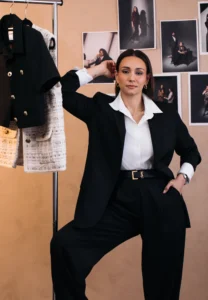
Entrepreneurs and professionals who work with Barbara Lia quickly realize that personal style is not something you “discover” randomly. It is something you build intentionally, based on your identity, your lifestyle, and how you want to be perceived.
What Is Personal Style, Really?
To understand how to find your personal style, you first need to redefine what it means.
Personal style is not:
- trends
- aesthetics you see online
- copying someone else’s look
Personal style is:
- a reflection of your identity
- a visual expression of your lifestyle
- a consistent way of presenting yourself
👉 It is not about variety, it is about coherence.
Why Most People Feel Lost in Their Style
Many people struggle with how to find your personal style because they approach it externally instead of internally.
Barbara Lia often identifies these patterns:
- buying pieces without a clear direction
- dressing based on mood instead of intention
- trying to follow trends that do not align
- having a wardrobe full of clothes but nothing that feels right
Research in psychology shows that when choices are not aligned with identity, they increase confusion and decision fatigue (Iyengar & Lepper, 2000).
👉 Without clarity, more options create more uncertainty.
How to Find Your Personal Style
1. Start With Self-Definition
Before looking at clothes, you need to define yourself.
Ask:
- Who am I today?
- What do I want to communicate?
- How do I want to be perceived?
Barbara Lia starts every process here, because style without identity is inconsistent.
👉 Style is a reflection, not a guess.
2. Understand Your Lifestyle
Your personal style must work in your real life.
Define:
- your daily activities
- your work environment
- your social life
- your climate
👉 A style that does not match your life will never feel natural.
3. Identify What Already Works
You do not start from zero.
Look at:
- pieces you wear often
- outfits you feel confident in
- items that receive positive feedback
Barbara Lia uses this as a foundation to build consistency.
👉 Your current wardrobe already holds clues.
4. Remove What Creates Noise
Clarity comes from elimination.
This includes:
- clothes that do not fit properly
- pieces that do not represent you
- items that do not combine easily
👉 Without removing, you cannot see clearly.
5. Build With Intention
Once you have clarity, you can build your style strategically.
Focus on:
- consistency in silhouettes
- a defined color palette
- pieces that work together
- quality over quantity
Barbara Lia guides clients through this process to ensure their style is not only aesthetic, but functional.
👉 Style becomes effortless when it is intentional.
The Benefits of Finding Your Personal Style
Understanding how to find your personal style changes more than your wardrobe.
Clients working with Barbara Lia often experience:
Clarity
You know what works and why.
Confidence
You feel aligned with what you wear.
Consistency
Your image becomes recognizable and intentional.
Efficiency
You reduce decision fatigue and unnecessary purchases.
👉 Style becomes a tool, not a question.
Common Mistakes When Finding Your Style
Barbara Lia frequently sees:
- trying to define style through trends
- confusing inspiration with identity
- keeping clothes out of attachment
- expecting instant clarity without process
👉 Style is built, not found overnight.
Conclusion
Learning how to find your personal style is not about experimenting endlessly, it is about creating alignment.
Your style should reflect who you are, support your lifestyle, and communicate your positioning clearly.
Through a structured and personalized process, Barbara Lia helps clients build a style that is consistent, intentional, and aligned with their identity.
👉 When your style is clear, your presence becomes stronger.
FAQ
How long does it take to find your personal style?
It depends on your starting point, but with a structured approach, clarity can happen much faster than trial and error.
Can my style change over time?
Yes. Your style should evolve as your life, goals, and identity evolve.
Do I need to follow trends to have style?
No. Strong personal style is based on consistency and identity, not trends.
Why do I feel like I have nothing to wear?
This usually happens when your wardrobe lacks coherence, not quantity.
Can I build my style on my own or do I need guidance?
You can start alone, but structured guidance, like the process used by Barbara Lia, accelerates clarity and avoids costly mistakes.