Introduction
Understanding what to wear for business is no longer just about dress codes, it is about perception, credibility, and positioning. In professional environments across Europe, your image plays a direct role in how you are evaluated.
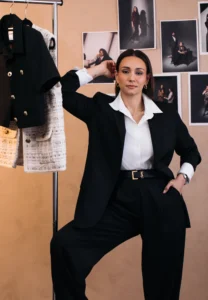
Professionals who work with Barbara Lia understand that dressing for business is not about following rules, it is about aligning your image with your level, your environment, and your objectives.
What Does “Business Dressing” Actually Mean Today?
To define what to wear for business, you need to move beyond outdated categories like formal or casual.
Business dressing today is about:
- clarity
- consistency
- alignment with your industry
Barbara Lia works with clients to ensure their image reflects not only professionalism, but also intention and awareness.
👉 It is less about rules, more about reading the room correctly.
What to Wear for Business in Different Environments
1. Corporate and Structured Environments
In more traditional industries, expectations are clear.
For both men and women:
- tailored pieces
- neutral color palette
- structured silhouettes
- high-quality fabrics
👉 Your image should communicate reliability and precision.
2. Creative and Flexible Industries
In creative environments, there is more freedom, but also more risk.
You can introduce:
- softer structures
- more expressive elements
- subtle variation in color
However, Barbara Lia ensures that even in creative fields, the image remains intentional, not random.
👉 Freedom without structure reduces credibility.
3. International and European Contexts
Understanding what to wear for business in Europe requires cultural awareness.
For example:
- Munich tends to favor structure, discretion, and polish
- Lisbon allows more fluidity, but still values elegance
- international environments require adaptability and consistency
Barbara Lia integrates these nuances into her work, especially for clients operating across countries.
👉 Your image must adapt without losing identity.
Key Elements of a Strong Business Image
To master what to wear for business, focus on these core elements:
Fit and Structure
Clothing should fit properly and create a clean silhouette.
Color Strategy
Neutral tones build authority, while accent colors should be used intentionally.
Fabric and Quality
Quality is visible, even when subtle.
Consistency
Your image should remain coherent across different contexts.
👉 These elements define how you are perceived before you speak.
Do You Need to Buy New Clothes?
In many cases, yes.
Understanding what to wear for business often reveals that:
- your current wardrobe does not reflect your level
- key pieces are missing
- quality or fit needs improvement
Barbara Lia works with clients to:
- evaluate what works
- remove what does not
- introduce pieces that support their positioning
👉 The goal is not more clothes, but the right ones.
Common Mistakes in Business Dressing
Barbara Lia frequently identifies:
- dressing too casually for the environment
- overcompensating with overly formal pieces
- inconsistency across different situations
- ignoring fit and tailoring
- relying on trends instead of structure
👉 These mistakes create confusion, and confusion weakens authority.
The Impact of Image in Business
Your image directly affects how you are perceived.
Research shows that people form judgments about competence and professionalism within seconds of seeing someone (Willis and Todorov, 2006, Princeton University).
👉 This means your clothing is already influencing your opportunities.
How to Build a Business Wardrobe That Works
To apply what to wear for business effectively:
- Define your environment and expectations
- Clarify how you want to be perceived
- Edit your current wardrobe
- Build around versatile, structured pieces
- Fill gaps strategically
Barbara Lia structures this process into a clear system, ensuring long-term consistency.
Conclusion
Knowing what to wear for business is not about following generic advice, it is about creating alignment.
Your image should support your role, reflect your level, and communicate your intentions clearly.
Through a structured and personalized approach, Barbara Lia helps professionals build a business wardrobe that is precise, functional, and aligned with their positioning.
👉 When your image is aligned, your presence becomes stronger and more effective.
FAQ
How should I dress for business in different European cities?
Adapt to the level of formality in each city, while maintaining a consistent and intentional image.
Can I be stylish and still look professional?
Yes, as long as your choices are intentional and aligned with your environment.
What are the most important pieces in a business wardrobe?
Structured pieces, well-fitted garments, quality fabrics and polished shoes.
How often should I update my business wardrobe?
Only when there are clear gaps or when your role or positioning changes.
How do I know if my image is aligned with my level?
If you feel inconsistent or not fully taken seriously, your image likely needs refinement.